Check out my article in the Organic Times Magazine created completely by WUR MOA students! Page 9.
Showing posts with label wageningen university. Show all posts
Tuesday, July 31, 2018
Sunday, July 1, 2018
The Science of Beer MOOC Opens September 3!
Just a note, Wageningen students can receive credit for the course! We've had over 17K registrations and over 300+ verified learners!
Wednesday, June 6, 2018
Reaping the Benefits of Diversification At Loverendale-Ter Linde
By: Tamisan Latherow and Linde de Vries
FSE-30306 Analysis and Design of Organic Farming Systems
Executive Summary
In this paper we explored the possibilities of integrating several multi-functional aspects to Ter Linde. Our primary goal is to make the system more diverse and thereby more resilient, but also to work within the farmer’s dreams of creating space for tourists, more permanent employment opportunities, better soil and water availability, and more returns on his crops. We have focused on these throughout the research and pinned down several features we believe can cover these topics: Alternative Fodder Production, Intensification of Rotation: Pasturage and Crops, Berry Production, and Flower Strip Utilization.
Friday, June 1, 2018
Agriculture: SUST Design of a Supportive Intervention
Supporting
and Understanding Sustainability Transitions (SUST)
ECS-67100
ECS-67100
Title of Project: Afvalwater - A
Sustainable Approach to Wastewater Treatment in the Netherlands
Notation: The
project is self-contained and not associated with WUR. I am working on this
project alone and have already done an initial pitch/proposal. In this
assignment I will be discussing both the initial proposal and edits that have
been made while working with the facilities to start the project.
Thursday, May 24, 2018
Final Report: FSE Internship at Landgoed Zuylestein
Designing a diversified cropping plan for a historic vegetable garden at Landgoed Zuylestein
Introduction
Introduction
The parameters and goals for
the internship I selected were to design a cropping plan in space and time
while considering the historic value and aesthetics of the garden. The client
wanted a garden that would have a high yield with less work. We decided to
accomplish this through a combination of crop rotation, intercropping, mulching
methodologies and a historical component after meeting with both Wageningen and
Zuylestein. The program was under the management of the Farming System Ecology
Department at Wageningen University and Research (supervisor Dirk van
Apeldoorn) and Landgoed Zuylestein under co-supervision with owner Jemima de
Brauwere and garden manager Thea Dengerink. The internship started October 4,
2017 and concluded May 9, 2018, with 4 additional check-in dates throughout May.
I was considered part-time until period 5 (March 19, 2018). Until this point I
worked 100+ hours on items such as plant lists, planning charts, soil sampling,
manure quantity for C:N ratios, and composting methodologies. Afterwards I
worked on-site to create and plant/maintain the garden, specifically the 3 test
beds (4, 6A, and 8).
Tuesday, March 27, 2018
Oh yeah, Astrophysics
So....I feel like I write that a lot. "So," but it doesn't matter. Here's the thing, I want to apply to CalTech for my PhD. Yes, I know, CalTech is one of the hardest schools to get into and PhD's are even harder, but it's my top choice for school so there you have it. There are two major reasons: first, their curriculum is class and research based, which I prefer over straight research based and second, they have a really amazing Geological and Planetary Sciences department.
Water Innovation Challenge: Category Afvalwater (Wastewater)
WML & Waterschapsbedrijf Limburg challenged students to come up with innovative solutions for 4 themes within the water cycle. With the Water Innovation Challenge (WIC) students work out their idea or solution as a business plan, mockup and / or prototype.
I participated as part of the Afvalwater (Wastewater) Challenge....and won! So, now to share my idea with the rest of you.
Monday, March 19, 2018
Updates: My brain hurts, does yours?
Typically this blog is simply for completed projects for my various educational endeavors. Tonight, however, it is the 'don't do as I do' blog. Let me start by saying I am tired. Exhausted really. I tried to take the weekend off to recuperate from the semester, but it hasn't helped. In the past 4 grading periods I have done the following:
Zuylestein Composting Day: May 10, 2018
On Saturday, May 10th, 2018, I attended a Volunteer Day at Zuylestein. There were 21 volunteers including myself and 2-3 members of the Zuylestein garden crew on hand to work in various activities. I worked with the garden manager, Thea, on creating compost and beginning the garden beds in one of my test plots (7A).
Thursday, March 15, 2018
Tuesday, December 12, 2017
Food Science: Beer
I'm working on a MOOC for WUR about Beer. There are several portions, but I'd like to post the two sections I'm working on: Culture and History and Cultivation Methodology (Storage, Preservation, Transportation). These are rough drafts, but it might be interesting to someone.
Wednesday, December 6, 2017
Medieval Medlars
In the book, Food in Motion: The Migration of Foodstuffs
and Cookery Techniques, an entire chapter on Medlars and their introduction
to the Netherlands provides us with recipes and history.
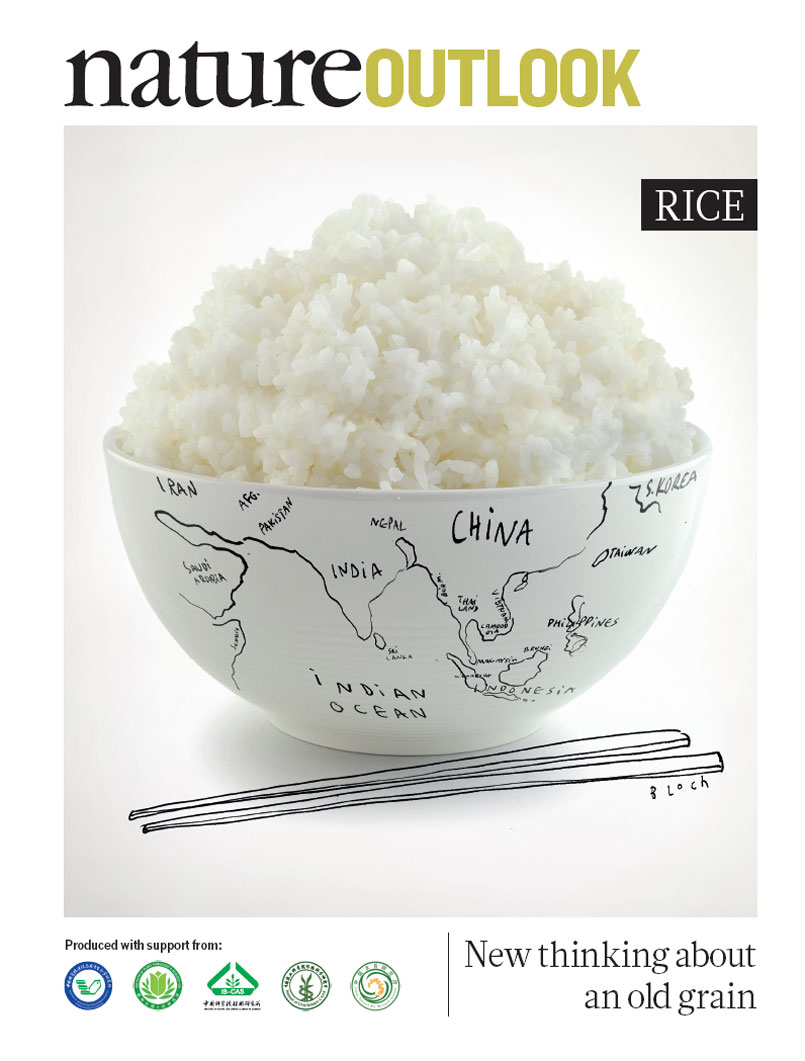
The Future: A Sustainable and Resilient Rice System in India (week 6)
Click the picture to see the larger version of our Poster Project on what we want for the Future of Rice in India.
Big thanks to my teammates all grading period:
Nicholas Panayi
Samuel van Rozelaar
Parth Shah
Adrien Krouse
TEEB Analytics regarding SRI within the Indian Rice Production System (week 5)
TEEB Analytics regarding SRI within the Indian Rice Production System
Introduction
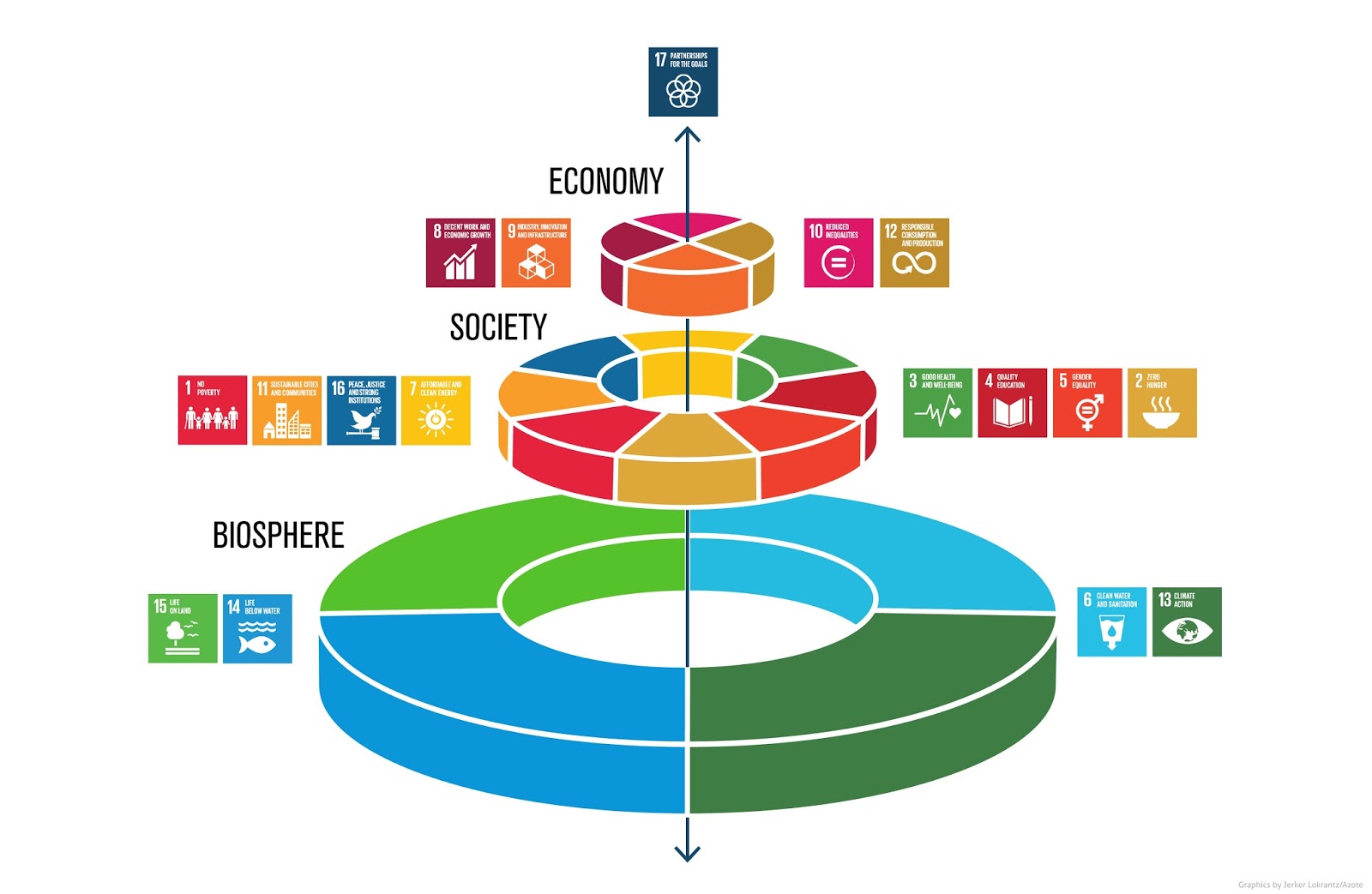
When designing an analysis (typology) to evaluate the hidden or overlooked aspects of a farming system one must look at the various impacts on the Health & Skills, Society, Economy, and Environmental spheres. These four realms are interconnected and many of the items to be discussed will need to be viewed under each subset to see the true benefit or cost of the externalities mentioned. The System of Rice Intensification (SRI) methodology to be discussed in this paper will be viewed from the lens of two distinct stakeholders: that of the Government/Research Institutes and that of the Community/Farmers in Indian rice production. SRI has promising results in terms of environmental benefits and is actively being introduced in India, which is why this papers aim is to investigate the hidden costs and benefits further within the Indian context.
Thursday, November 23, 2017
A Culture of Change: Change Agents in Indian Rice Production (week 4)
HAFED, a Historical Perspective on Change Agents in India
HAFED, or The Haryana State Cooperative Supply and Marketing Federation Limited, began as a grassroots initiative by the farmers in the Haryana State of India who banded together to create a place-based cooperative where they could sort, manage, and sell their produce. The organization grew over the years as more pieces of the supply chain were added. They purchased inputs like fertilizer and seeds and resold them to other farmers creating a retail section of the co-op, and added processing mills, marketing agents, and storage and transportation agencies, all the while the co-op grew in influence and power. While the HAFED does not only work within the rice production system, they do specialize in it. They have multiple rice mills and specialized marketing schemes just for rice and work with farmers to track yields of different varieties.
Wednesday, November 15, 2017
Environmental Science: Soil & Land Management
My morning class this period is Land Degradation & Development. Each week we have a group project which normally culminates in a ppt presentation and sometimes a paper to go along with it. I'm going to post the powerpoints and documents we have done here to keep track.
Internships, Course Overload, and Vision Boarding
I normally post only finalized items here, because it gets confusing otherwise, but maybe a bit of stream-of-consciousness writing will benefit someone.
Global Embeddedness and Resilience in Indian Rice Production (Week 2)
Question 1: To what extent is Rice in India embedded in and shaped by globalized sets of relations, such as global commodity markets and the agroecosystem?
Subscribe to:
Posts (Atom)