Showing posts with label sustainable. Show all posts
Showing posts with label sustainable. Show all posts
Monday, September 9, 2019
Media Literacy and Waste-Treatment in Africa
See the first article here: https://www.weforum.org/agenda/2018/05/addis-ababa-reppie-trash-into-energy
Okay, a few questions/points here:
1) I had to go through a series of websites to find out how they were going to deal with the emissions. The answer I found was not satisfactory. According to the UN, "The plant adopts modern back-end flue gas treatment technology to drastically reduce the release of heavy metals and dioxins produced from the burning" (https://www.unenvironment.org/news-and-stories/story/ethiopias-waste-energy-plant-first-africa). From there I had to figure out what exactly 'back-end flue gas treatment' meant. Basically they apply a series of filters, scrubbers, and attractors to collect different chemicals including nitrogen oxides and sulfur (https://www.britannica.com/technology/flue-gas-treatment), which is good, but the website goes on to say, "technologies to remove mercury and carbon dioxide from flue gases have lagged, but there is growing interest in these areas". So, still no answer on the CO2 aspect.
Now, we have another problem in where that CO2 will be 'stored'. Is it getting shipped out into the atmosphere or into the ground? If into the ground, we have to be careful about access to water sources because we don't want another Lake Nyos in Cameroon (http://news.bbc.co.uk/onthisday/hi/dates/stories/august/21/newsid_3380000/3380803.stm) and while Nyos wasn't supposedly a man-made situation, the potential is there.
2) The other part is the ash bricks. What about the heavy metals, chemicals, and pollutants left within them? There was no discussion as to how they were to be dealt with before processing. So, we have a material that is to be used for housing and buildings but has the potential for off-gassing and killing it's occupants. Fun. And if you think something like that can't happen, check out these articles (https://www.nytimes.com/1989/12/07/nyregion/incinerator-ash-in-a-new-guise-building-blocks.html or https://friendsoftheearth.uk/sites/default/files/downloads/safety_incinerator_ash.pdf).
Now, that's not to say they can't be made safely, but there are certain requirements and additional costs which you can see here: (http://www.smartwaste.co.uk/filelibrary/Brick_Incinsewagesludgeash.pdf and https://journals.sagepub.com/doi/abs/10.1177/0734242X17721343).
3) Who is funding this? Well the UN site says this at the very end of the article: "The project is the result of a partnership between the Government of Ethiopia and a consortium of international companies: Cambridge Industries Limited (Singapore), China National Electric Engineering and Ramboll, a Danish engineering firm. The consortium was established to design, construct and in some cases own waste-to-energy facilities customized for Sub-Saharan Africa. Reppie is the first of what the consortium hopes will be a series of such facilities in major cities across the region". So, China, Denmark, and Singapore are building and potentially owning these facilities that will reduce hard waste, but will contribute to pumping out massive CO2 and other GHG chemicals into the atmosphere. China is already jumping in to try and establish rights within Africa and now we have this (https://www.cfr.org/backgrounder/china-africa):
"Through significant investment in a continent known for political and security risks, China has boosted African oil and mining sectors in exchange for advantageous trade deals. Chinese companies are also diversifying their business pursuits in Africa, in infrastructure, manufacturing, telecommunications, and agricultural sectors. However, China’s activity in Africa has faced criticism from Western and African civil society over its controversial business practices, as well as its failure to promote good governance and human rights."
My question is why? Why are we ignoring a huge amount of people, land, and potentialities and allowing/encouraging Chinese involvement?
Also, this is my field: agriculture, rural development, wastewater treatment, and sustainability. I am also a researcher, as in, I am very good at researching. Checking this video took me to half a dozen different sources and the innate knowledge the last two-years of formalized education in these fields to put together. How is the general public, who is neither knowledgeable, nor interested enough to check, supposed to find these things out? Media Literacy is an art and a science and anymore, I find very few people have the skills or interest to spend an extra hour doing this for every post and news article.

Tuesday, July 31, 2018

Wednesday, June 6, 2018
Reaping the Benefits of Diversification At Loverendale-Ter Linde

By: Tamisan Latherow and Linde de Vries
FSE-30306 Analysis and Design of Organic Farming Systems
Executive Summary
In this paper we explored the possibilities of integrating several multi-functional aspects to Ter Linde. Our primary goal is to make the system more diverse and thereby more resilient, but also to work within the farmer’s dreams of creating space for tourists, more permanent employment opportunities, better soil and water availability, and more returns on his crops. We have focused on these throughout the research and pinned down several features we believe can cover these topics: Alternative Fodder Production, Intensification of Rotation: Pasturage and Crops, Berry Production, and Flower Strip Utilization.
Friday, June 1, 2018
Agriculture: SUST Design of a Supportive Intervention
Supporting
and Understanding Sustainability Transitions (SUST)
ECS-67100

ECS-67100

Title of Project: Afvalwater - A
Sustainable Approach to Wastewater Treatment in the Netherlands
Notation: The
project is self-contained and not associated with WUR. I am working on this
project alone and have already done an initial pitch/proposal. In this
assignment I will be discussing both the initial proposal and edits that have
been made while working with the facilities to start the project.
Thursday, November 23, 2017
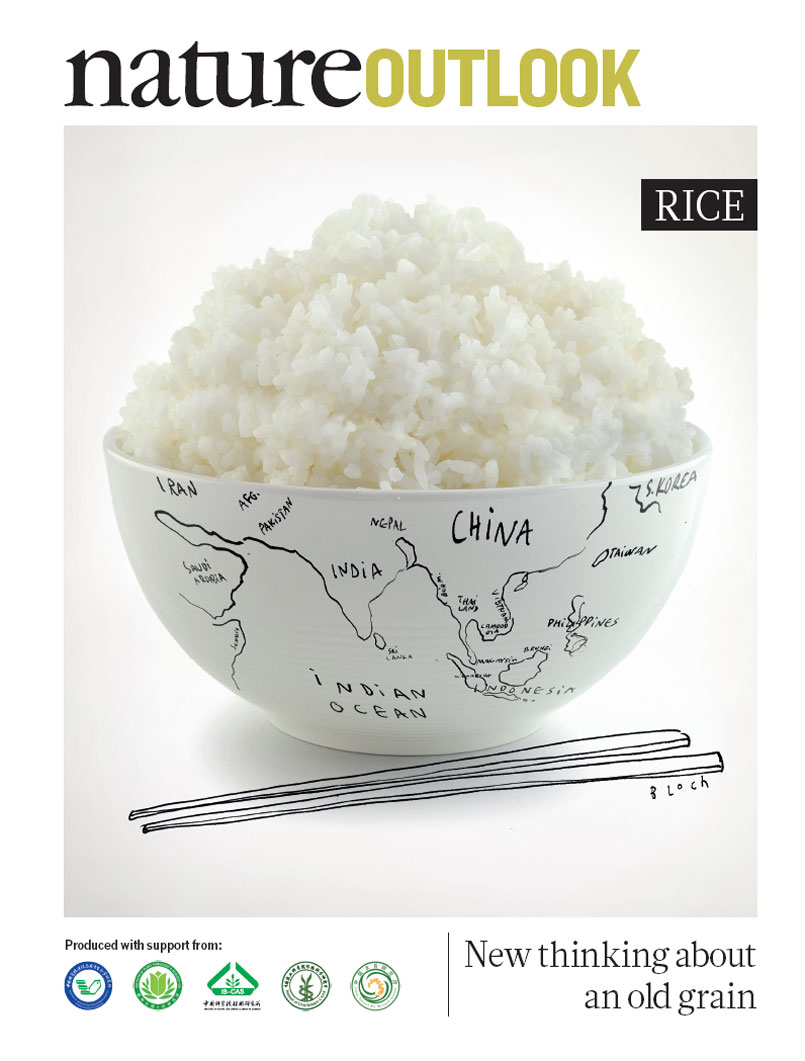
A Culture of Change: Change Agents in Indian Rice Production (week 4)
HAFED, a Historical Perspective on Change Agents in India
HAFED, or The Haryana State Cooperative Supply and Marketing Federation Limited, began as a grassroots initiative by the farmers in the Haryana State of India who banded together to create a place-based cooperative where they could sort, manage, and sell their produce. The organization grew over the years as more pieces of the supply chain were added. They purchased inputs like fertilizer and seeds and resold them to other farmers creating a retail section of the co-op, and added processing mills, marketing agents, and storage and transportation agencies, all the while the co-op grew in influence and power. While the HAFED does not only work within the rice production system, they do specialize in it. They have multiple rice mills and specialized marketing schemes just for rice and work with farmers to track yields of different varieties.
Tuesday, October 17, 2017
EcoSystem Services and Other Types of Sustainability Rant
This was originally a 2 second FB rant because I was studying for my Organic Agriculture and Sustainability exam and I realized we spend so much time preaching "organic, organic, organic", but what we really need to be saying is "sustainable, sustainable, sustainable". Organic doesn't mean anything if it dies every year or can't be adapted to different environments. In Europe, hydroponics isn't considered organic because the plant needs to be in direct, unimpeded contact with the soil. There can be no barrier to the roots and any soil, so if you have contaminated soil (let's say in an urban environment) and you put a waterproof membrane down and clean soil on top, you can't call it organic....how pedantic is that?
Subscribe to:
Posts (Atom)